"The Cure for Everything is Saltwater, Sweat, Tears, or the Sea."

About Us

My photo
San Juan Archipelago, Washington State, United States
A society formed in 2009 for the purpose of collecting, preserving, celebrating, and disseminating the maritime history of the San Juan Islands and northern Puget Sound area. Check this log for tales from out-of-print publications as well as from members and friends. There are circa 750, often long entries, on a broad range of maritime topics; there are search aids at the bottom of the log. Please ask for permission to use any photo posted on this site. Thank you.
Showing posts with label B. C.. Show all posts

19 June 2013

❖ "Privateers" on the Schooner GRACIE S ❖ 1949

Pilot Schooner GRACIE S 
O.N. 86275
New home port, Seattle, WA.
Also known to flirt with mariners in the San Juan Islands.
Dated 1949 photo by Kenneth G. Ollar©
Original photo from the archives of the S. P. H. S.
"Wanted––able lads between the ages of 14 and 18––to sail on schooner GRACIE S––leaving 20 June for unknown ports to westward."
      Find a lad whose heart wouldn't be captured by such an advertisement appearing in this day and age. However, that's no imaginary ad. That very sign appears in the window today of the downtown business establishment of E. Edison Kennell, Jr.
      And, 20 June, the 97-ft schooner GRACIE S. will shove off from the Seattle Yacht Club with a crew of teenage lads. There will be no timetable. For two weeks they just go where the wind blows.
      Only a few years ago the most venturesome lads found their big thrill in running off to sea on a sailing ship. Such storied vessels have all but disappeared from the high seas, yet this thrilling adventure is to be born again, here in Seattle.
      Kennell recently purchased GRACIE S, for 50 years a pilot schooner off San Francisco Bay, and refitted her as a sea-going school for lads 14 to 18 years of age.
GRACIE S
Courtesy of John Kennell©

      It's an adventure that Kennell will thrill in as much as will the boys, for GRACIE S is a perfect replica of the old traders. She is one of the most seaworthy vessels afloat, and though everything aboard her has been kept old fashioned for atmosphere, she has all the modern conveniences––a big Diesel engine, steam heat throughout, showers, an electric galley, and complete radio equipment, consisting of a transmitter and receiver and radio-direction finder, bringing a lad as close to his parents as the nearest telephone.
Privateer Ted Rogers, age 14,
at the helm of the famous Schooner GRACIE S.
 William Donley, aft, the nav instructor.
Strait of Juan de Fuca, 1949.
Photo by Kennell-Ellis©
Original photo from the archives of the S. P. H. S.
      The ship's company will consist of Kennell, the skipper; Mrs. Kennell, who will take care of the menu, as well as sew on the occasional button; James (Doctor) Tuohy, the cook; William Donley, navigation instructor; Dave McCrea, engineering officer; Amos Levitt, Jr., mate, and 14 "Privateers", as the lads will be known.
      Any boy between the permitted ages, who can swim and has a love for the sea, is eligible to take part in one or more of the five two-week cruises scheduled for this summer. The only cost is sharing the expenses of food, fuel, and the cook's wages.
      Monday, 20 June, GRACIE S. will leave for her first cruise––to Princess Louisa Inlet. Every other Monday another two-week trip will be leaving, visiting Barkley Sound and Hot Springs Cove, Butte Inlet, a trip around Vancouver Island and a visit to Knight's Inlet, all in British Columbia waters.
      Drills and schooling will occupy the first few days of each cruise. Then the "Privateers" will sail into the ocean, then back to the coast, and the particular destination of that trip. Almost every night the hook will be dropped and the lads will go ashore and beach comb and fish and visit many coastal BC communities.
Above text by Bob Sutton for the Seattle Times, 17 April 1949.
July 1949:
Ed Kennell, Jr. and the privateers on GRACIE S stopped off at the Lopez Yacht Club on their two-week cruise through the islands en route to Princess Louisa Inlet, BC.
Orcas Islander Newspaper, 7 July 1949
November 1964: 
Fate: 
Sadly, WANDERER (ex-GRACIE S.) wrecked when she struck a reef off Rangiroa Island, 200 miles northeast of Tahiti in November 1964. She was en route to Panama. All hands were rescued. Her last owners were Omer Darr and Joe Price of Bartlesville, OK.

13 June 2013

❖ Ferry Fatalities at ACTIVE PASS ❖ 1970

QUEEN OF VICTORIA & SERGEY YESINEN
Active Pass, British Columbia
 
3 August 1970,
from the archives of S.P.H.S.©
On 3 August 1978, the B. C. ferry QUEEN OF VICTORIA, recently returned to service after having been lengthened to 426-ft, was negotiating the sharp turns of Active Pass near the midpoint of her regular run from Tsawwassen to Swartz Bay on Vancouver Island. Capt. R. J. Pollack was on the bridge, with quartermaster Peter Van Sickle at the helm as the big ferry passed Mary Anne Point light on Mayne Island at about noon. The helmsman later said that a fishing boat had forced the ferry to maintain a course more to port and further from the shore than was normal.
      Meanwhile, just out of sight behind Helen Point, the 14,700-ton Russian bulk carrier SERGEY YESINEN was steaming toward the ferry, inbound for Vancouver heavily laden with steel products from Yokohama. Capt. David Crabbe, the Canadian pilot aboard the freighter, had opted for the short route to Vancouver through Active Pass, although ocean vessels generally take the longer but less restricted route around Turn Point.
      As the Russian ship rounded the point, her helm was set to port, which put her on a collision course with the ferry, which was somewhat further to port than she should have been. Whistles blasted and both vessels reversed engines, but within two minutes of the time they sighted each other, the clipper-like bow of the 530-ft freighter had knifed halfway through the port side of the ferry just forward of the funnel. The force of the collision was such that many passengers on QUEEN OF VICTORIA believed an explosion had occurred. At the point of impact on the car deck, a young Victoria mother, Ann Hammond, had just stepped from the family car with her infant son Peter in her arms when the freighter sliced into the ferry. They were later found trapped under the wreckage of two other automobiles. The baby was dead; the mother died that night at a Sidney hospital. Above decks, a 17-yr old New Jersey girl, Sheila Taylor, had been sitting in a lounge. Her legless body was found later on top of a wrecked car on the auto deck below, where Mrs. Hammond and her child had died. Seven other passengers were injured seriously enough to require hospitalization. The loss of life would doubtless have been greater had not alert crew members taken advantage of the seconds available to them to herd passengers below from the upper deck solarium just forward of the funnel near the point of impact.
      Following the collision, there was a brief period of panic among the passengers, but order was quickly restored, life jackets were distributed and lifeboats prepared for lowering, as Canadian Coast Guard and private vessels stood by to render aid. The bow of the freighter was kept pressed into the 40-ft gash in the ferry's side until it was determined that most of the damage was above the waterline. By evening the QUEEN had returned to the Tsawwassen terminal under her own power to discharge passengers and vehicles, after which she proceeded to North Vancouver for extensive damage repairs. The SERGEY YESINEN suffered only minor bow damage. A review board subsequently attributed major blame for the collision to Capt. Crabbe and ordered his pilot license suspended for 15-months. The decision was appealed and Capt. Crabbe continued in service until a federal court of appeals subsequently exonerated him of all charges.
Above text from The H. W. McCurdy Marine History of the Pacific Northwest (1966-1976); edited by Gordon Newell. Superior Publishing Co., 1977. Issue #187

Below note. Bremerton Sun, (AP) from Vancouver, B.C. 4 August 1970:

"A home movie buff may provide the best evidence of what caused the B.C. ferry QUEEN OF VICTORIA  and the Soviet freighter SERGEY YESENIN to collide, killing three ferry passengers.
      The amateur movies, shot by Ed Johnson, New Westminster, confirm the absence of large numbers of smaller boats. The amateur movies came to light as three investigations opened into the accident. Johnson was jugging herring just inside Helen Point on Mayne Island when he saw the freighter entering the Pass. He picked up his movie camera; the film he shot showed the freighter swing well into mid-channel, then belch black smoke as it went into reverse trying to avoid the collision. The ferry appeared almost dead in the water."
A map with Active Pass can be viewed here

11 December 2012

❖ The Christmas Ship to the Islands ♥ ♥


Let's celebrate the hardworking volunteers who start long before December to collect food,  toys, and candy, to stuff all available lockers. The ship's crew disembarking are dressed in beautiful, handmade costumes to bring Santa, carols, and good cheer, to the young of heart in the San Juan Islands and the Gulf Island group. 
      The good folks started out with a fish tender but most of the crew now enjoy a warm cabin on a chartered passenger vessel often chased by chilling wind and lumpy seas. These volunteers with hearts of gold have set aside personal time in the busy holiday season since 1947. 
      Hundreds of islanders have warm memories of hearing the gentle music coming down the channel towards their chosen island dock. The Bellingham Jaycees, the Sea Scouts, the Bellingham Central Lions, the Junior Chamber of Commerce, just a few of Santa's support crew. A salty Merry Christmas to these generous people and our readers all.

Bellingham Lions Club promotion
18 Dec. 1947.

L-R: Rank Bostrom, John O'Rourke
of the Bellingham Hotel,

Don Satterlee, Art Howard.
This is the earliest known photo to
document the beginning

of the program to transport Santa Claus to the children 
of the San Juan Islands, and later
to the Gulf Island group.

Photo (#1. 004579) by Jack Carver
Purchased from the Whatcom Museum of History and Art©
For educational purposes only, for a copy
contact WMHA, thank you.


With
soldering iron, a needle,
and hairspray as insulation,

the Jaycees clowns,
Don Ryan & Riggs Nelson,

in the cabin of the Christmas ship,
yacht WYRILL.

They attempt to rewire the sound system before
arriving at Ganges.
Photo (#1.036027) by Jack Carver.
Purchased from the Whatcom Museum of History and Art.©
For educational use only.
For reproduction please contact WMHA.


Apologies...a few photos have fallen off and I am working on calling them home very soon.

"The Christmas Ship--It was a wonderful sight, and sound too, as the decorated Christmas Ship came into sight as it passed Shaw Island. The music was gently flowing over the waters, so soft and gentle. Think it was early evening, perhaps just after dinner time when it arrived at our Orcas dock. People gathered on the dock mostly from nearby and Eastsound--don't remember if the ship went into Deer Harbor, too? I think it went into Victoria in those days and Waldron, too.

      Great excitement; after the ship was tied up, jolly, happy, Santa climbed onto the dock, and the children clustered around him. He gave out candy and heard the children tell what they wanted for Christmas. The parents and friends too enjoyed this time together. Then, it was time for him to go, and with a whistle for 'all aboard' Santa waved goodbye, and the Christmas carols, and the ship headed for the next stop. The music and beautiful lighted ship gently faded away as parents and 'lil' ones headed for their cars and home. Oh, what a beautiful sight to see the ship.
      It was a wonderful experience for our children to enjoy, and for parents too. In those days there were few stores or gift shops on the island, and few bright lights.
      As years went by, the time of arrival of the Christmas ship varied, it came earlier and traveled further, and made more stops. What a wonderful thing for the Bellingham people to do, they brought such happiness.
      For some years, as the experience developed, through the guidance of Bus and Esther Sheehan at the store and Clyde and Dorothy Brown and the 'Stitch and Gossip Club', cookies and cocoa were served. A 'party' on the dock!!
      Those years were magical, and this reminiscing has brought our early day Christmas back to me."
Mary Schoen, 2009, Deer Harbor, San Juan Archipelago.
Mary and her husband Robert Schoen sailed CHANTEY to the San Juan Islands on their honeymoon in 1946, one year ahead of the Christmas Ship from Bellingham. 

09 November 2012

✪ Perhaps Fortune Lay South? ✪

Vintage postcard from the archives of S. P. H. S.
Click to enlarge.
"While, in the late 1800s, most Victoria [B.C.] residents seeking riches went north, there were, between 1897 and 1902, four vessels which when they passed Cape Flattery turned south in their search for fortune. Their goal was the little island of Cocos, a few hundred miles west of Panama.
      There was reputed to be the concealed treasure beyond imagining.
      The first man to use the caves of Cocos as a hiding place for pirate loot was the naval captain, Edward Davis, who turned to this nefarious profession in the late 1600s.
Cocos Island, Costa Rica.
05˚31' 08" N,  087˚04' 18" W
From The Pacific Islands, Vol. 2 1943.
      More than a century later another renegade, Capt. Grahame (later alias 'Benito') of H. M. S. DEVONSHIRE added another installment.
      Last substantial deposit arrived there on the British barkentine MARY DYER. On her had been loaded by authorities of church and state in Lima the riches they sought to save when the liberator Bolivar was feared to be approaching. The sight of such wealth was too much for the British seamen and they absconded to Cocos.
      That this last loot had indeed been hidden there was proved by visits in 1844 and 1850 by the man Keating (sometimes written Keyton) who brought away gold and jewels to the value of $35,000. The other stories of concealment were probably equally true, the hiding place each time supposed to be but temporary. But pirates' led short lives and their secrets died with them.
      To add to the difficulties of those who sought to recover the treasure were the land-slides that obliterated clues and landmarks.
      First Victoria group to join the many, past and present, lured by the thought of this immense fortune, was that which left in the Spring of 1897 on the 40-t schooner AURORA. It was commanded by Capt. Fred Hackett, a brother of the Capt. Thomas Hackett who had received from a fellow 'Canadian Maritimer', Keating, the maps and papers that the latter had received directly from Thompson, the lone survivor of the barkentine MARY DYER. On the AURORA expedition was also Mrs. Brennan, former widow (third wife) of Keating.
      Later that year another surprising vessel left Victoria and some weeks later turned up at Cocos. Officially, of course, the IMPERIEUSE, flagship of the Pacific Station, and the accompanying AMPHION had gone south on a series of friendly calls on neighboring nations but the presence on board of a certain C. Harford, disguised though he was as a newsman, later made this excuse rather thin! Harford was the man who had been brought to Victoria on the AURORA's return voyage after the Victoria ship had found him there marooned when a Costa Rican gunboat had failed to return to pick him up.
      When the naval vessels got to Cocos hundreds of blue-jackets were sent ashore to 'dig for diamonds'--but unsuccessfully!
      This little foray not unnaturally led to protests from the Costa Rican government, owner of the island!
      The next year it was the later so famous Capt. J. C. Voss who sailed for Cocos, but so well did he disguise his purpose that Victoria papers of the time report the setting out of the little 8-ton XORA as under the command of Percy McCord and the 'turn of the century' exhibition of Paris as her destination. Voss, in his Venturesome Voyages, speaks of her as a 10-ton boat and identifies himself (undoubtedly correctly) as captain. With Voss and McCord were young Harry Voss and a certain Hass (Hahn?)
      A few months later they were back in Victoria, Voss ill from tropical fever, and not a penny richer.
      After this pause until the autumn of 1901 when the Pacific Exploration and Development Co. was formed in Victoria, its aim, the sale of 750 ten-dollar shares to raise the money to outfit another expedition to Cocos. Captain was to be the experienced Fred Hackett and an unusual angle of this undertaking was to be the use of some recently-invented 'metal-diviner'. These machines were said to be capable of locating gold and silver hidden underground from a distance of two hundred yards or more. 
      They were to be operated by Justin Gilbert, for many years Victoria court stenographer, and Daniel Enyeart of Washington, US. The two men, plus a Mr. Raub, went along on the BLAKELY on its 1902 expedition as passengers. Among the crew members was George Kirkendale, extracts from whose diary of the voyage follows" [in the next chapter of Home Port: Victoria.]
Above text; from this book, Home Port Victoria. Author published. 1967. 
                                   

True stories told by the men who sailed from the Port of Victoria
one hundred years ago.
In this city, a common interest in the sea brought these mariners together and resulted in the formation of the Thermopylae Club, a monthly gathering at which they yarned together for over thirty years.

Book Search here
Home Port: Victoria


Cocos Island is a National Park of Costa Rica with an annual rainfall of 275". Jacques Cousteau called it "the most beautiful island in the world".


According to these authors, Cocos Island is the home of the biggest hidden treasure in the world. They claim the main Cocos Island treasure came from Peru; if you'd like to read their book try this search.

Book search here
The Lost Treasure of Cocos Island

20 March 2012

❖ Guardians of the Sea ❖ THERMOPLYAE CLUB ❖ Victoria, B. C.

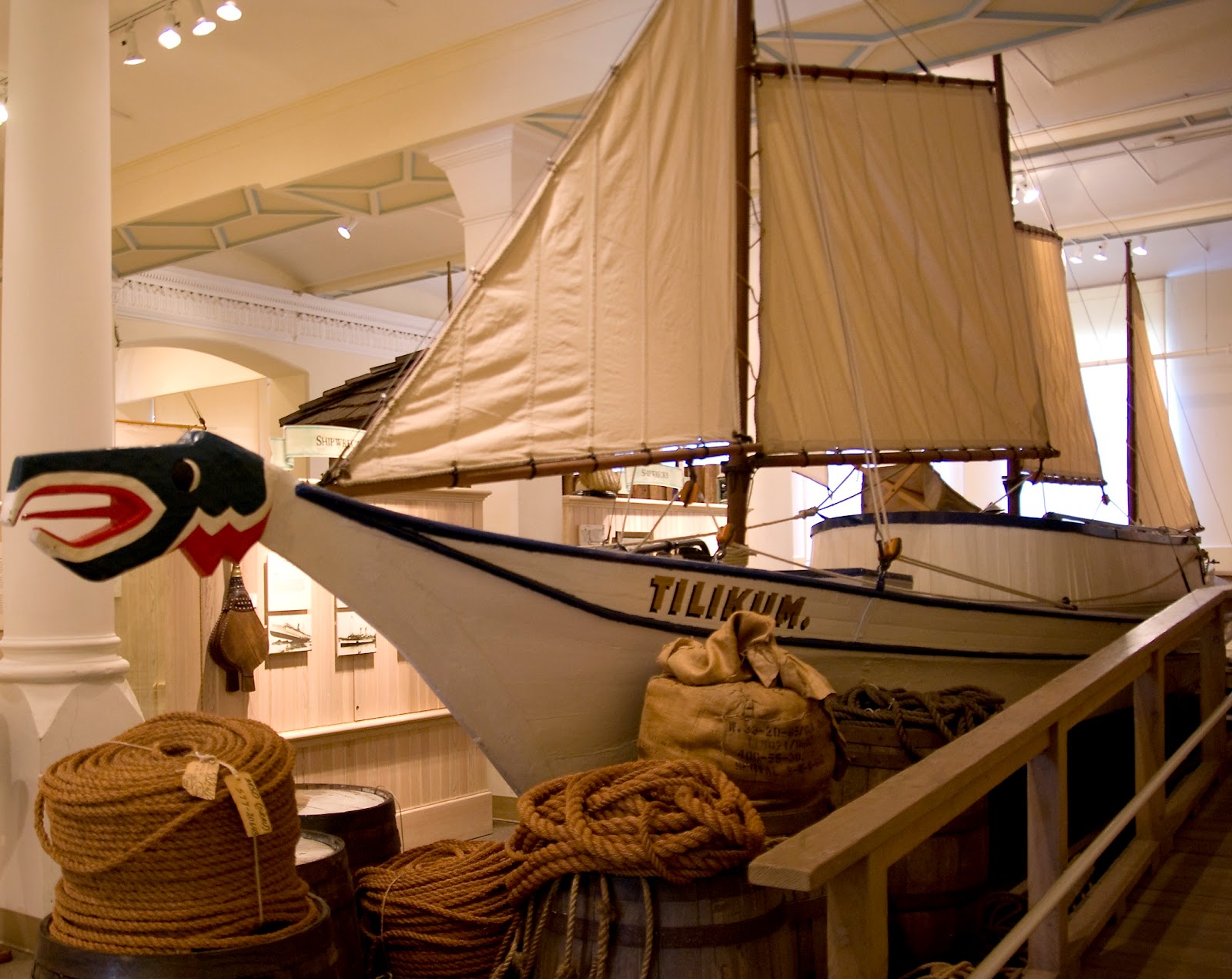
"As guardians of memories of the sea, the Thermoplyae Club [formerly of Victoria, B.C.] has undertaken a variety of projects. Of these, most valuable was its part in the preservation and restoration of the famous TILIKUM, the craft (basically an Indian canoe), in which in 1901 Captain J. C. Voss set out from Victoria; three years and 40,000 miles later he reached England after a voyage that took him across three great oceans [with a near] circumnavigation of the world.
TILIKUM 
Home port, Maritime Museum of B.C., Victoria.
      That this boat should, after all the admiration heaped on her at Earls Court, by the mid-1920s have become a derelict hulk, rotting in the mud on the banks of the Thames, seems unbelievable. Equally surprising is it to learn that although in 1930 the efforts of the Victoria and Island Publicity Bureau and the generosity of the Furness Withy Line saw the canoe returned to its home port, the repair the hull was given was but rudimentary, and it was left roofless, exposed both to the weather and to the depredations of vandals.
      So she lay for some years--but then there came one evening to the Thermopylae Club meeting some naval yachtsmen who had just sailed across the Pacific. These told the club members in no uncertain terms their opinion of a group that called itself ship-lovers yet neglected such a priceless, irreplaceable craft as the TILIKUM.
      The club sprang into action. Led by the dynamic Captain McDonald, they soon collected the money needed to finance restoration and Captain Victor Jacobsen started on the work that saw her returned to more or less, the condition in which she appears in the Maritime Museum today.
      Later the Thermopylae Club, on the suggestion of old sealing captain Max Lohbrunner, and through the work of shipmate Bob Dallaway (with the permission of the BC government) installed in her three hollow masts. These, though shorter than the original, do give some idea of her rig and also provide ventilation for the interior.
      The club has also painted her hull and encouraged her removal to the protected position in Thunderbird Park that she occupied for many years. Today they rejoice that now she, like themselves, enjoy the hospitality of the Maritime Museum in Bastion Square, Victoria.
      Another spot that finds TILIKUM and THERMOPYLAE close neighbours is on the Causeway wall above Victoria's Inner Harbour. Here 28 bronze plaques make up the Centennial Parade of Ships which commemorates vessels that had some historical connection with Victoria, TILIKUM and THERMOPYLAE of course among them. The first was donated by the Royal Victoria Yacht Club, the second, presented by its namesake, is easily found since it is the only tablet bearing an illustration of the craft it memorializes--a non-conformity not achieved without effort and obduracy on the part of the veteran mariners!
      Another reminder that Victoria was once the home port of this famous ship was the ten-foot water-line model of her entered in the history section of the Victoria Day Centennial street parade of 1958.
      Built on the premises of the 100-year ship chandling firm owned by Shipmate Emerson Smith, and not far from the rings on the cliff at which the original clipper once tied up, the model is one of fine detail. That these are accurate was assured by the daily visits of Captain Harry Bilton to the premises on Wharf Street. It was by then 65-years since he had trodden her decks but he had not forgotten, although it is to be doubted that on so small a replica her figurehead of King Leonidas would be provided with the demountable sword whose removal, for safety's sake, the old captain remembered as one of his last duties before the start of each voyage.
      Later this model was given to the Rainbow Sea Cadets in whose headquarters in Victoria West she holds an honoured place.
      Yet a few miles farther west, above a little cove in Esquimalt Harbour, a concrete pillar marks the spot where, as the bronze tablet on it records:

      'When Vancouver Island was an infant colony nearly a century ago it was here that the gallant sailing ships from the old world stopped to replenish their supplies of water.'
Conceived by Shipmate John Keziere and carried out through the co-operation of provincial government departments, the generosity of city building supply firms and the sweat of sundry Thermopylae Club members, the cairn recalls the days when, from ships anchored off in Limekiln Cove, sailors poled to shore the floats loaded with barrels in which they would take on from the fresh-flowing stream water for the long journey back to Europe.
      Today the sailing ships and most of the men who sailed them are gone, but through this book some of their experiences, it is hoped some little contribution may be made to the preservation and dissemination of the memories of those sturdy times".
Ursula Jupp, Home Port: Victoria. Published by author, Victoria, B.C. 1967.


Book search here––


Not quoted here but an interesting book on the "absorbing and instructive true-life story" of Captain J. C. Voss (1854-1922) and his 40,000 mile voyage from Victoria to England has been published.

Captain John C. Voss
The Venturesome Voyages of Captain Voss, 
Century Publishing, 1989.

A introduction to the Voss book by F.E. Grubb, the Registrar & Librarian of the Maritime Museum of B.C., lists historian/writer Ursula Jupp as the greatest authority on Captain Voss.
 Book search here––

28 October 2011

❖ "CAPI" BLANCHET of the classic book ❖ The Curve of Time ❖

Of the hundreds of books about sailing and cruising along the Pacific Coast of BC--one of the most enduring bestsellers has been The Curve of Time by M. Wylie Blanchet (1891-1961). It hovers perpetually on or near the list of the ten best-selling non-fiction books in BC. It's a memoir of the Blanchet family's adventures in the 1930s and 1940s condensed as if they were from one extended voyage. 
      Here is a lovely tribute (abridged) about the author's life from Edith Iglauer Daly, author of Fishing with John, courtesy of Harbour Publishing (see website below.)
      

"When I came to live on the BC coast I was given as a sort of spiritual introduction, a remarkable little volume entitled The Curve of Time by M. Wylie Blanchet. The book was an appropriate choice, my summers were spent on a fishing boat, the MOREKELP, with my husband John Daly, a commercial salmon troller, and the area he regularly traversed partly followed the path traveled by Mrs. Blanchet and her five children on their tiny motor launch, the CAPRICE.
      The five Blanchet youngsters, led by their indomitable parent, spent four summer months for fifteen years––on a 25' boat, traveling around the west coast of Vancouver Island and as far north up the Inside Passage as Cape Caution. They explored the inlets and bays, sometimes following the trail broken by that mariner Captain George Vancouver, with whom they felt a great empathy; their experiences finally written down in a series of sketches that encompassed all the years of their journeys as if they were one. 
      The Curve of Time is M. Wylie Blanchet's only book, originally published in 1961 when she was 70-years-old. That same year she died of a heart attack, sitting at her desk where she was found slumped over her typewriter. She had lived just long enough to enjoy being a published author. 
      M. Wylie Blanchet. At first, she tried using just 'M. Wylie.' was for Muriel, the author's given name, which she hated; Wylie was borrowed from a grandparent, and Blanchet was acquired by marriage. Altogether it was the impersonal sound that she intended: she hoped the author would not be recognized by the people up the coast about whom she was writing, who knew her simply as "Capi" Blanchet. As to the nickname––wasn't she the Captain of the CAPRICE?
      In the last chapter of the book, entitled 'Little House,' Mrs. Blanchet comes off the CAPRICE to write about the family's land base on seven secluded acres of Vancouver Island's coast, from which they departed each June and to which they returned in October. The Curve of Time manages to be sentimental, imaginative and often strays into whimsy, but it is reticent about the hard facts; it reads like an impressionist painting. Its characters, whose physical appearances are never really described. We know what they do and how they feel but not what they look like or who they are other than a mother and 5 children.
      Despite the reticence, we do know the important things about this remarkable woman. She comes through as extremely courageous, innovative, and as a kind of mechanical wizard compared to most women. Yet readers close her book with a scratchy feeling of curiosity.
      Her Canadian publisher Gray Campbell was both neighbour and friend, has described her as having 'a delightful shyness, as a serious person with a delicious, dry, sense of humour.' Campbell first became acquainted with her when the CAPRICE was berthed next to his boat at Canoe Cove, a short distance from the Blanchet house, which was 5-miles from Sidney. He too was writing, and Capi used to sit in the cabin of his boat and read the chapters of his uncompleted manuscript. He has said since that it was the lack of success of the first edition of The Curve of Time, whose English publisher never bothered to see that it was stocked in bookstores either in Victoria or Vancouver, that helped to convince him that there was a need for regional publishing.
       Muriel Blanchet was born Muriel Liffiton in 1891 in Lachine, Quebec, into a well-to-do family with High Anglican principles. The Liffitons were English but the Snetsingers, on her mother's side, were pre-Revolution Dutch settlers in the Hudson Valley. They crossed the border into Canada during the American Revolution, settling in the St. Lawrence valley with a land grant downstream of the town of Cornwall. Grandfather Snetsinger was a Member of Parliament for the area and left a considerable inheritance whose final distribution was made only a year ago [c.1979]. The ancestral home is now under sixty feet of St. Lawrence River water and all the original land has been sold.
      Muriel was the middle one of three sisters and something of a tomboy.  The results of her 4-yr scholastic campaign are still evident in a row of small red leather Temple Volumes of Shakespeare. Each volume was given her as a prize for top honours in a different subject, and she never stopped until she had the whole set, inscribed to Muriel Liffiton in the heavy black script of R. Newton, Rector of St. Paul's, and bearing the motto Non Sans Droit with the school's coat of arms. Between 1905 and 1908 Muriel Liffiton repeatedly captured first prizes in Latin, French, spelling, astronomy, history, geography, geometry (Euclid), algebra and English, beginning with a modest two her first year and winding up with six at graduation. 
      Muriel Liffiton was expected to go on to university but instead at 18, she married Geoffrey Blanchet, the brother of a school friend––a decision she is said to have regretted later. 
      Geoffrey and Muriel Blanchet started married life in Sherbrooke, Quebec. The family grew to include four children, they packed them all into a Willys-Knight touring car which, according to one of the children, 'had flapping curtains and a great top that folded like an elephant sitting down,' and started driving across the country looking for an island to live on.
     The Blanchets were able to buy 7-acres at Curteis Point, overlooking the Gulf of Georgia, and they kept it until Mrs. B. died in 1961, although Little House was torn down in 1948. It was an unusual house, a strangely mystical English cottage covered with ivy, with a big fireplace and a billiard table on the first floor and four bedrooms up a rickety flight of stairs on the 2nd floor. 'It was designed by a celebrated architect, Sam McLure, and built by a crook,' said David Blanchet, who was born there.
     Their boat the CAPRICE was purchased in 1923 for $600. It had been built the year before, a cold year, and the Brentwood Ferry, near which it was anchored, managed to shove a cake of ice into the side of the boat, sinking it. She was hauled out on a nearby dock and the Blanchets bought it on the spot, with water still dribbling out of it. 'This was probably when my mother learned to deal with engines,' David has commented. 'It had to be cleaned out immediately, once it had been in salt water. We had that same engine for 20-years until it was changed in 1942.'
      Peter B. remembers the first time his mother took the CAPRICE out on her own. It was in March, on his sixth birthday, and she had promised to take him to Shell Island, a favourite spot where she liked to say she would spend her 100th-birthday. She and Peter got in the boat, which they kept at Canoe Cove, and 'she cranked and cranked that darned engine, and still it wouldn't start,' Peter recalled. 'She could see my father sitting on the Point watching to see if we would get off and she had to go and get him, which really irked her. Then she and I went fishing for the day off Sidney Spit. We caught a couple of fish which we cooked over a fire on the beach at Shell Island.'
      The second summer after the death of Geoffrey, Mrs. B rented Little House and took the children off on the boat for the first of the venturesome trips that as a composite memory became the substance of The Curve of Time. With the money she received from renting Clovelly in summer and her own small income, she was able to manage. 
      The three younger children, Joan, Peter, and David, were educated almost entirely at home, by correspondence, by their mother, and by a Scottish engineer who was a mechanic at the Canoe Cove boat works, who taught them math, chemistry, and physics. Joan, known as the rebellious member of the family, went to art school in Vancouver and then continued her art studies in New York. When she left Vancouver, she bought an old Indian dugout canoe for five dollars and paddled home. It took her five days, and she crossed the Gulf of Georgia at night, to avoid traffic and heavy seas, a remarkable feat since it required at least nine hours of steady paddling. Frances King vividly recalled hearing about her sister's arrival. 'When she rounded the point in her dugout, wearing an old red sweater, Capi and the boys were sitting on the bluff, wondering who the Indian was! Joan had expected some commendation and was amazed at Capi's anger. 'Just because I'm a fool doesn't mean you children have to be!' Capi said.
      In appearance, Capi Blanchet was of medium height, with very fine blonde hair brushed upwards so that it formed a kind of haze around her head. Her normal attire was a pair of khaki shirts, an Indian sweater, and sneakers that sometimes had holes in the toes. She had begun wearing shorts in the 1920s, long before they were fashionable, and her daughter Elisabeth has recalled that a journalist writing about people he had met on the BC coast in The Saturday Evening Post 'commented on her shorts and how suitable they seemed for what she was doing-- running a boat.'
      Mrs. B's children and friends were enormously fond of her, somewhat in awe of her all-around competence, and thought her fair-minded but domineering. She could do almost anything that men did and still be feminine.
      'She had a lot of courage or self-confidence, but she did not overestimate her mechanical ability,' a writer friend, Hubert Evans, has said. "On a run from Sidney to Vancouver, the CAPRICE was overtaken in the Gulf by a late-season southeaster, and the little boat took quite a dusting,' he related. 'Capi had several children aboard. 'I told the Lord I could take care of the boat but would he please keep the engine running,' she said to me afterward.'
      Capi Blanchet does not seem to have been particularly light-hearted or spontaneous, and she was somewhat arrogant about anyone she considered her inferior. She had a slightly Church-of-England attitude, even talking to fishermen, who were never sure how to take her. She had a good sense of humour but a rather studied laugh.
      A description from her daughter Frances exemplifies the quality of character her children and friends remember best: 'she was capable of handling any situation. If she was worried she didn't let us know.'
      On the boat Mrs. B was even-tempered under what must often have been trying conditions at such close quarters; her method of discipline was to separate her children, not argue. David remembered his mother losing her temper with him only once when he was about twelve. 'It was some silly mistake, something about an anchor, that I did my way instead of what she wanted,' he said. 'Normally her eyes were brown, but suddenly they were a turquoise colour and blazing. It was unbelievable!'
     She was one of those rare women who are mechanically inclined and enjoyed tinkering with engines and working with tools. Every so often she took apart the CAPRICE engine, a 4-cylinder Kermath, cleaned and painted it and put it back together again, grinding the valves herself. 
      An intimate friend of Mrs. Blanchet's, Kathleen Caldwell, has described her as 'not excessively domestic, but interested in people and politics, which she loved to discuss. Her house was comfortable and pleasant, and Capi could produce a beautiful meal with what looked like no effort.' In their close circle, Capi was renowned for her roast beef, Yorkshire pudding, and mouth-watering pastry. Oddly enough, although she liked to eat fish, she never cooked it except outdoors on a beach because she couldn't stand the smell.
      Mrs. B liked to draw sea creatures in pen and ink, and once illustrated a fairy story she wrote with drawings in the margin. She was also a fair pianist, and in later life enjoyed playing a violin that her grandfather gave her when she was 12. It now hangs on the wall of David's living room, but his mother used it often; she had joined a small orchestra at Deep Cove, playing second violin, reputedly a quarter-tone flat.
      David fell ill before the interior of Mrs. B's new house was completed and it never seemed to advance beyond that half-built stage. She lined the whole interior with vertical cedar planks herself, but doors were a late addition to the bathroom and kitchen and knobs usually came off in hand. Her firewood was never quite dry; Kathleen Caldwell once delighted her by bringing a gift of Presto logs. When Capi's doctor prescribed a drier climate for a cough that later developed into emphysema she ignored him and instead sat with her head as far into her oil stove as she could get it for 20-minutes a day. 'That's my high, dry climate,' she said.
      As for the CAPRICE, it was never meant to have any other owner than Capi B. After the war she planned to build a new boat and sold the CAPRICE for $700––a hundred more than she had paid for it––to the owner of a boat works in Victoria, who hauled it up for repairs. While it was on the ways the entire boat works burned down, including the CAPRICE. Mrs. Blanchet did have another boat after that, the SCYLLA, but she never really used it.
      'I loved the summer journeys but I doubt if any of us appreciated quite how unique our childhood was. We just knew Capi was doing something unusual,' daughter Elisabeth writes from England. 'She used to get a bit tense if we were taking green water over the bow, wallowing about in a following sea, or running the Yaculta Rapids. Otherwise, she took everything in her stride––whether crossing the Straits at 4 am to beat the sou'wester or exploring new territory.'
      'Only fools seek adventures,' David has remembered his mother as saying at one time or another. However foolish Mrs. B's adventures may have seemed to her (which is doubtful), they have a dreamlike charm for an increasing number of readers. The Curve of Time has had a separate and ongoing life of its own, achieving its own small immortality."
Thank you to author Edith Iglauer Daly who celebrated her 100th birthday on 10 March 2017 in Madeira Park, B.C. She passed away at Sechelt, BC, 13 February 2019. 
Raincoast Chronicles Six/Ten, 1983
Courtesy of Harbour Publishing
www.harbourpublishing.com


08 October 2011

❖ CAPTAIN BARNEY JOHNSON ❖ TAKES YACHT TO SEATTLE ❖ 22 June 1937

   
WESTWARD HO (ex-WHITE WINGS II)
Home waters, Vancouver, B. C.
WESTWARD HO was designed by Edson B. Schock,

and built in 1927 by George Askew, for Walter Cline.
Cline traded her to Barney Johnson for the famous ALEXANDRA in 1930.
"I suspect it was Barney who changed her gaff rig.
He added the first genoa to be seen in these waters.
 He won a lot of races with her during the years he owned her.
It seems he borrowed her on occasion; he won the Beaver Cup with her in 1939.
"

Photo and quote courtesy of David Williams, Vancouver, B. C.


"At approximately 8:30 this morning, in the swirling narrows and under an overcast sky, Captain Barney Johnson, popular skipper of the WESTWARD HO, dipped his ensign and officially said goodbye for his WESTWARD HO to the Royal Vancouver Yacht club. Ushered out by Tom Ramsey's ARMITA, carrying Skipper Ramsay, Art Jefferd, and Fred Holland, the WESTWARD HO, under power, circled around in the swirling tide, while the representatives on the ARMITA gave three hasty cheers and blew loudly on a foghorn.
      The WESTWARD HO has been sold to a girls' school outside of Seattle. Johnson was delivering her this morning. She was built in Vancouver and has been the property of Barney Johnson for the past eight years during which time she has been the commodore's ship on two occasions. She has always been regarded as the Royal Vancouver Yacht Club's number one sailing vessel, sort of one of the pillars of the sailing craft.
      'She's a beautiful boat,' sadly murmured Johnson. 'I'll hate to lose her. But I have made up my mind. Come on, boys, have another drink with the sun, you have to have a mizzen now you have your topsail set. Can't sail on one wing, you know.'
      Another toast, a few hearty choruses of 'Blow the Man Down,' and the WESTWARD HO was on her way.
      Over the weekend she sailed her last race, the Ballenas Islands race for the Beaver Cup, and was an easy win.
      'We really sailed her on her last race,' said Barney. 'I'll hate to see her go... but maybe we can get her up here for the ladies' race with some of the girls handling her.'
      According to reports Barney Johnson will not be off the sea. The famous old salt plans to get a small boat and do some racing."
News article by Hal Straight 
The Vancouver Sun
Tuesday 22 June 1937.
From the archives of the
Saltwater People Historical Society

Below notes from Miles McCoy, West Sound, Orcas Island. 
McCoy was the skipper of WESTWARD HO in the summer of 1950 when he was 19-years old. The West Sound sailing scene hooked him on settling in the area.
WESTWARD HO (O. N. 236434)
West Sound, WA., then sailing with Camp Four Winds-Westward Ho campers.
"Turtleback" land formation in background.
Undated photo courtesy of Nick Exton, Orcas Island.

 "The yawl WESTWARD HO was associated with Four Winds-Westward Ho Camps from the late 1930s through the mid 1950s. The camp being named after the vessel; Westward-Ho camp became the boy's camp when Four Winds-Westward Ho became co-ed. The yawl served the camps for many years longer than any other vessel. Hundreds of children sailed and sang camp songs aboard while learning the ropes and the ways of the sea. After WW II ended, Jack and Bill Helsell prepared WESTWARD HO for the 1949 Trans Pacific Yacht Race. The race was a windy one with above average winds over a majority of the course.  [Miles McCoy was crewing.]
      While in Hawaii WESTWARD HO was met and sailed by a bevy of senior campers from Four Winds. They sailed several day sails in Molokai channel and learned about sailing in brisk conditions.
      Later in August after a pleasant voyage from Hawaii to the coast, WESTWARD HO arrived at the Orcas Island camp to a jolly welcome by some of the Hawaii contingent and camp staff. There was much music, singing, and regaling of sea stories.
      WESTWARD HO sailed for the camps for several more years before being sold in the 1950s to sail off to Hawaii and points south. She has not been spotted in the Pacific Northwest since."

15 April 2011

SAGA OF THE SEA IN THE GULF ISLANDS


Salt Spring Island, Gulf Island Group, B.C.
Undated photo postcard from the archives of the S.P.H.S.
Copyright by Western Canada Airlines©
"It was on 13 July 1960, just outside Bedwell Harbour, when disaster struck and a 25-day drama began to run its course. There was no inkling of the coming events when H.A. "Buster" Horel loaded his bulldozer on Asa Douglas' barge for a routine towing job from Pender Island to Salt Spring Island. It happened quickly and no one really knows how, but it is theorized that the barge struck a deadhead, filled with water, tilted, and dumped the "cat" into 200-feet of water.
      Everyone but Buster thought the 'cat' was gone for good. Everyone, including the insurance company. The insurance company paid off and with almost a snicker gave Buster the salvage rights for $50. He and Asa began dragging operations. He hired the services of two scuba-divers from Chemainus.
       It was 16 days later before they hooked the 'cat' for the first time. The divers went down 204-feet, and working in the dark, attached a line. A storm came up and the rope slipped off.
       It was another five days before they hooked it again. This time they were successful––the line stayed on. The dredge, that is currently widening the canal between North and South Pender, was brought into the fray. The dredge, with its boom, and a tug, worked for five hours before swinging the 'cat' upon the beach. It was the 6 August. It was not the end of the saga.
       The action of the sea water had turned the pot metal parts of the 'cat' into the consistency of cookies. The metal crumbled at the touch. Buster, who had stripped his old 'cat' of parts, began to work on the water-soaked machine. He changed the parts and pumped diesel fuel through the system. Two hours after beaching, the bulldozer was running again!
       Divers working in complete darkness at 204-feet is a rarity, and indeed, this salvage operation may well be a record. Buster Horel is to be commended for tackling this almost hopeless job and succeeding.
       Maybe a 'cat' has nine lives after all."
Mrs. Etta Egeland late of Friday Harbor, had a relative living on Salt Spring Island who mailed her the above column. 
The story had been written up in the weekly paper, Driftwood.  
The Friday Harbor Journal received permission from the editor, Mr. W. Fisher, of Salt Spring, to reprint it in the Journal in 1960.

17 October 2009

❖ STEAMING TO TOFINO (2001) ❖

RAINBOW, 1987.
Steam powered whaleboat with new Scotch boiler with
author John Campbell in West Sound, WA.
Photo donated by steamer John Campbell.

Steaming to Tofino or 
On the Road with the RAINBOW

In order to attend the Nanaimo Steam Meet, the RAINBOW elected this past summer [2001,] to cruise the nearby western sounds, Barkley and Clayoquot.

Barkley Sound is most easily reached from Port Alberni with a splendid Provincial launch site for the local salmon fishing. The week before the Nanaimo meet was spent among the Broken Islands in Barkley Sound. These are a National Park of tiny islands facing the (so called) Pacific Ocean. My fears of being overwhelmed by sport fishermen and kayakers were unfounded. It is an easy steam down the Alberni Canal with the morning outflow wind to the Sound but, once there, the Broken Islands are all little islands and snug coves, nearly deserted. A few camps and lodges are along the mainland shore but not many.


The Broken Islands are probably closer to paradise today than in 1787 when Robert Barkley and his 17 year old wife Frances looked in for furs and found inhabitants everywhere. Evidence of those first inhabitants are the middens and canoe landings we see. Later the islands were logged of all but the greatest of trees which remain today. These are not the lofty specimens of the Macmillan Cathedral Grove but squat, wind blasted stumps with multiple trunks reaching only 50 feet in height but 8 to 12 feet in diameter. Survivors. In the lee of the seaward islands the water is clear, the kelp alive with rockfish and the bottom shows big moon snails and sea cucumbers, those giant echinoderm cousins of the little nudibranches, urchins and even starfish. Ashore on Wouwer Island a hundred sea lions arf and ark and terrify the kayakers. The feeling, apparently, is mutual.

At this point the RAINBOW is still burning dense, dry Orcas Island fir but water must continually be found. It is no problem as these little islands have many springs, even hoses to the beach!! On a sunny summer day it is a pacific paradise. Of course when the fog sweeps in, it is more like summer in San Francisco. Cold.

The first week was over too soon and the 25-mile steam back up the Alberni Canal, failing the afternoon sea breeze that sweeps the little outboard skiffs home, seemed longer than we remembered. RAINBOW does not pull much of a stern wave but the little Semple-5 just keeps turning, year after year, and we get there.

Once in Port Alberni we haul out, unship the rudder and dinghy, strike the mast and head back over Alberni summit to Nanaimo where we ship the rudder, launch the boat and dinghy and reset the mast and head to the dock full of steamers and push in alongside where Bill Jackson is distributing beautiful Arbutus firewood which we take on greedily. Two days later we once again back the pickup hubs awash into the saltchuck and haul out, unship the rudder, throw the dinghy on top of a fresh load of firewood, and head back over Alberni summit and on to Tofino.

I enjoy steaming on the British Columbia coast but not towing 8000-pounds of boat and trailer to a launching place. The Perils of the sea, according to my old Lloyd’s policy, include:
“Sinking, Stranding, Fire, Enemies, Pirates, Rovers, Jettisons, Takings by Kings, Princes and People of what Nation or Quality soever, and Barratry of the Master and Mariners that the underwriters do contentedly bear,” but they conspicuously do not include the road to Tofino, the town at the mouth of Clayoquot Sound on the western shore of Vancouver Island."

The old Chevy is doing pretty well on the grades in low range, the temperature just rising slightly and holding steady. The road is narrow but the traffic is light so we do not need to pull off at every chance. It is serene really, but I remember Grapes of Wrath, the Joad family, and all they possessed in a careening trailer hauling over the Tehachapis in August, vapor lock, flat tires, wailing babies, angry pregnant women, but maybe I am confusing memories. No gas the next 80-miles but both tanks are full and August on Vancouver Island is a far cry from the Mohave desert. We pause at a wide turnout beside the Kennedy River to let the traffic pass, relax and check the trailer for the unforeseen.

It was a good thing we did as the left rear trailer wheel is adrift and just about to leave. Studs are almost gone and the holes big enough to slip over the nuts. On a road that is mostly 24 feet from sheer rock to the edge this is a handy place to make repairs. How long was the wheel loose? I know this is a danger yet at Nanaimo with all the hauling and loading I failed to torque those lug nuts. The dual axle trailer puts a terrific sideways torque on the wheels and any nuts not seized beyond hope are at risk. The crew asks why I do not have a checklist. Noted.

Jack up the trailer, pull the wheel, bearings and brake drum. Mark Fortune, Tofino Air pilot arrives. Is that a Steamboat? Is it for sale? What will you take? “Right” says his wife holding a baby in one arm and his brother who is trying to crawl out the window in the other “we only have two airplanes and a dump truck in the front yard now and who wants to see grass or flowers around the house you have exactly two minutes to get back in this car before it leaves.”

That is time enough to learn that Ucluelet is the place to find a new wheel; Serge Noel Towing, open tomorrow. The next Samaritan confirms Serge and recommends grease in salt water. “Rust works 24 hours a day, use plenty grease.” Unhitch trailer, split firewood while we wait and walk along the river until bears appear. Make supper in the boat, relax, and have a homebrew.

07:00 head for Ucluelet, avoiding bears on the road, into the fog but no Serge. Try café, home of Lions, Kiwanis, Boy Scouts, Soroptimists, and Wednesday bingo, this is it. At least the waitress is it, no wonder the place is full. Yes they serve oatmeal and no it is not instant, they serve that stuff in Tofino but not in Ucluelet.

08:15 Serge arrives and notes it is a six-lug, 16.5 wheel which is why they don’t make them any more but thinks there is one on a wreck out back under the blackberries. There is and, after rounding up some new studs and nuts, we are on the way back to the Kennedy river to ship the hub, bearings, new (to us) wheel, hitch the trailer and roll on to Tofino. First, however, squeaking ALL wheel nuts.

The launch site in Tofino is very steep, crowded, without a float, and very busy. Fishing boats are barely afloat, loading into half submerged pickups about to speed fresh fish/scallops/crab to Victoria & Vancouver but we pitch in, shipping and loading too, and are afloat again. Tofino is surrounded by water and most of it is not very deep but it moves very quickly. And it is busy. Commercial fishing, wild and farm, sport fishing, and ecotourism are everywhere. Yamaha-250 outboards are the universal power plant, single and twins.

In all, RAINBOW will spend three weeks in and out of Tofino. The first is spent circumnavigating Meares Island, a passage any single Yamaha-250 can do before lunch but we find plenty to see. On the return we try fishing some kelp beds on the ocean side until the fog sets in. As the fog sweeps past we take a compass bearing on the harbor and start the fog whistle. The 250s fly by in the murk, with radar, I hope, and Tofino Air takes off on the right while I can barely see the crew on the bow who eventually sees the pier equally at hand where it should be. Trust your compass.

The second week Wolfgang Schlager is aboard, before the mast again after many years. It is nice to have crew that can understand the weather reports and be trusted not to put us aground if the skipper takes a snooze. In fact, there is too much to do for much snoozing under way. Wood firing and navigating is a two man job under all but ideal conditions. We head north to Sidney Inlet and the traffic quickly thins. There are no float houses or vacation houses, anywhere. The boiler is firing sluggishly and it must be time to clean tubes. Again.

Fire-tube boilers are good steady steamers but the tubes are not self cleaning. The previous boiler, a Semple vertical was easily blown clean with a steam lance but the present horizontal is a chore. It is not the tubes, five minutes does them, it is cleaning the engine room afterwards. Wet cloths everywhere to catch most of it, washing the cloths, then washing everything with Ajax, then the engineer. Wolfgang, who was sent ashore, returns in the dinghy in time for lunch and then underway into gathering skies. Rain.

Tuesday, rain. This is the time we miss a dry bookshelf to wile away the time with Calvin & Ricketts and Belloc and Captain Marryat. Consume bonded stores and Ovaltine.

Wednesday, overcast but no rain. Bail fresh rainwater out of the dinghy into tanks and get underway for Hot Springs Cove where the hot springs and the surf mingle. And where the float planes and twin Yamahas bring tourists for a genuine wilderness experience. Getting there means rounding Sharp Point at the mouth of Sidney Inlet and as we approach the wind and tide and sea all rise and the dinghy would be airborne if it was not half swamped and we reflect on the beam reach around the point and how bad we want a hot bath with twenty other tourists and turn back to quiet Riley cove and have a cold bath in the creek.

02:00 in the night, the thing that goes bump in the night is heard.
Whack…………………whack………………………..whack…………..…….whack. Some say it is spirits and others say it is a bird and it sounds like someone breaking rocks with a 12# hammer. Is it a bittern?

Thursday, overcast, Jiffy cornbread muffins with huckleberries, baked in the firebox, and maple syrup for breakfast. Rain. Kyakers, very wet kyakers, pass thru the cove and we proffer some dry firewood. Wolfgang notes that some people are paying a lot of money for less fun than we. Under way in light drizzle and immediately wrap dinghy painter around the propeller shaft. Eventually we pass thru beautiful Sulphur Passage, the scene of old environmental battles.

Friday, overcast, catch some rockfish and start a soup stock atop the steam dome. Underway into wind and chop, things sound rough and find it is the shaft which has loosened. We duck into a lee and tighten up all and away for Matilda Inlet. Here we find calm water and a little warm spring at the head of the inlet.

Saturday, the word on the water is that the Coho are running. It is not clear what the fishing rules are even to the locals but all the fisheries workers are on strike so we slip a troll astern. We must pass Russell Channel, wide open to the Pacific, today but by afternoon find only a gentle swell passing in under now blue skies–– COHO! A 36” fish is aboard. By nightfall Wolfgang has it home in the smoker.

In three weeks, RAINBOW had barely glimpsed the reaches of Clayoquot Sound and it was time to haul out again and head up the road for home. The road held no allure but home, after a month beside the boiler it did, and I was out of firewood again.

Did you have fun, people ask? It was rain and fog and sun, lots of firewood splitting, bears and birds and fish and fresh huckleberries and the unknown around every point. And an almost dry roof on a rainy day. Fun sounds carefree like a Princess Cruise with short pants, funny hats, dancing, and all you can eat and no dishes to wash. We grill in the boiler and wash the dishes in the ocean and when we catch a salmon we have more than we can eat and lots of smoke and hot iron too. It is insufficiently carefree to be fun. It beats working, however, so maybe it is just loafing.
John M. Campbell
Orcas Island
September 2001

Archived Log Entries